Museum of Arts & SciencesHomeCollectionsOld St. Augustine VillageGamble PlacePlanetarium
Film ScheduleChildrens MuseumNature PreserveAudio ToursMuseum RentalMuseum SponsorsTravel ProgramsArts & Sciences MagazinePress RoomAbout The MuseumJoin Us!Contact Us
Visit The MuseumExhibitsCalendarEducationMembershipGiving
Current
 
The Armory

Opening August 15, 2008 - on long term display
Mary Louise Marzullo Gallery
 
Antique firearms, weapons and armor from the collections donated to MOAS by Kenneth Worcester Dow and Mary Mohan Dow in 1998, these spectacular artifacts have never been exhibited before. 
 
 
This includes the artistry of some of the most famous gunsmiths and weapon makers from the medieval period to the 19th century illustrated through a wide range of finely designed and decorated muskets, rifles and pistols, lions-head daggers, war axes, knives, sabers and straight-edge swords together with a rare late 17th century inlaid German crossbow.


Chinese Kites by the artist Sheng-li Gao

August 8 - 28, 2008
Chapman S. Root Hall
 
An exhibition of fifty Chinese kites will be on view for one month from August 8, 2008 in the Root Gallery, in honor of the 2008 Olympic Games in Beijing, China. These elegant kites will be installed to float and flutter from the high ceiling transforming the Root Gallery into a dreamlike wonderland.
 
Varying in size from around three inches square to two feet by ten feet, the kites depict great soaring birds, forest animals and symbolic Chinese designs created in glorious color by the young master kite maker Sheng-li Gao, who will be an honored guest demonstrating the craft of kite making throughout the show.


Artist Sponsor for Chinese Kites by the artist Sheng-li Gao


The Classical World:
From the collection of the Tampa Museum of Art

March 14, 2008 through August 2009
The Elaine and Thurman Gillespy, Jr. Gallery


The Classical World is a long-term loan exhibition of 200 plus rare Greek and Roman antiquities from the collection of the Tampa Museum of Art. Recognized as the finest collection of its kind in the southeastern United States, The Classical World surveys the material culture of the Mediterranean area from the Neolithic period to the Roman Imperial period, roughly 8500 BC to 476 AD.


The exhibition illustrates the types of art works characteristic of ancient Greece and Rome: painted pottery; sculpture in marble, bronze, and terra cotta; personal ornaments of bronze and gold; struck silver and gold coins; and a variety of ancient glass vessels as well as other items that illuminate interesting aspects of daily life. These rare and beautiful objects combine to lead the visitor into an intimate vision of the culture, values, and rituals of the classical world, and above all, offer an all-absorbing appreciation of classical civilization and artistic creativity. The Classical World: From the Collection of the Tampa Museum of Art is an expansive display that speaks to everyone, appealing to all senses and tastes by encapsulating history, design and beauty through many different examples of creativity. 

If you are interested in becoming a ‘Friend of the Exhibition’ please contact Karen Harris at 386-255-0285 or at kharris@moas.org


Great Masters of Cuban Art: 1800 to 1958

December 7, 2007 - September 1, 2008 (extended by popular demand)
The Edward E. and Jane B. Ford Gallery & The Gary R. Libby Entry Court

This must-see exhibition has received rave reviews from the Wall Street Journal, London’s Art Newspaper, the Miami Herald and many other noteworthy publications.


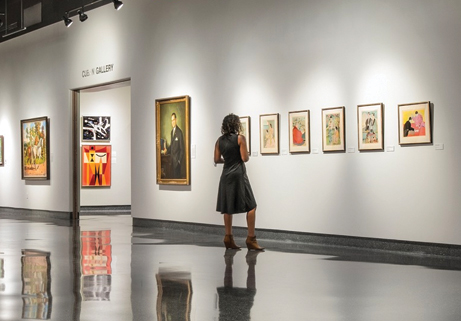
In celebration of the 50th anniversary of The Cuban Foundation Museum, MOAS is proud to present over ninety important Cuban artworks selected from the Ramos Collection.  Included are life-size paintings, elegant portraits, romantic landscapes, and still lifes filled with ripe, luscious fruits.
 

Great Masters of Cuban Art showcases paintings filled with movement and emotion that focus on five major themes beloved by Cuban artists: portraits, landscapes, music, religion, and the history of Cuba. Together these themes present the observer with visions of a lost Cuba. Featured Artists Include: Leopoldo Romañach, Esteban Valderrama, Antonio Sanchez Araujo, Evelio Garcia-Mata, Armando Menocal and Oscar Garcia-Rivera.


The collection was formed by Cuban born, Miami art collectors, Roberto and Carlos Ramos who have amassed over 400 Cuban oil paintings. The Ramos brothers focused on recovering the works of a generation of artists whose well-documented accomplishments are indicative of a thriving pre-1958 cultural environment. The Ramos brothers overcame the challenges posed by distance, time, and governmental impediments to rescue both the artworks and the archival art history of the Cuban Republic (1902-1958).

 
Wayne David Atherholt, MOAS Executive Director notes, “When Chief Curator, Cynthia Duval and I first visited with Roberto in Miami, we were overwhelmed with the vibrant colors, lyrical landscapes and dazzling portraits in his collection as well as the amount and depth of research and archival material he and his team have established.”


The Cuban Foundation Museum, housed at the Museum of Arts & Sciences, is home to one of the most important collections of Cuban fine and folk art outside of Cuba. The collection chronicles 300 years of Cuban history and art in more than 200 objects.


Florida's East Coast Pirates

Currently on display through December 2008
The Center for Florida History

This exhibition, made possible through the cooperation of two Florida museums, the Mel Fisher Maritime Heritage Society in Key West and the Museum of Arts and Sciences in Daytona Beach, provides an historic account of some of the more famous Pirates of Florida’s East Coast. Such legendary pirates as Edward Teach, A.K.A. Black Beard and others who plied the coastal waters of Florida in search of treasure, primarily during the 16th through the 18th centuries, are noted. Along with artifacts, including coins, bullion, ingots and tools recovered from shipwrecks off the East Coast of Florida, weapons from the period help illustrate the persuasive means that were used to relieve those less-fortunate of their assets.